Showing posts with label apocalypse. Show all posts

12 December 2022

Narrative and Writing a Compelling Story

Please note that if you are currently in the stages of holiday shopping, books make a fine gift and several books composed by me are available for your reading enjoyment. You will find them all with purchase links, cover art, and blurbs/descriptions on my previous blog post, so click here and be happy!


Pardon me. I awoke too late after not getting a good sleep. I'm doing the best I can to fulfill my obligations to what I imagine are throngs of blog readers anxiously sitting before their screens in eager anticipation for what words of wisdom or whimsy I might offer to them. And, to tell the truth, I seldom have any idea what will come from my keyboard until it does - and then it may be too late to prevent the ruination of my typing skills or my pedantic bent. In most cases, I prefer to confer everything I think about practically everything through the pages of a novel.

First, however, we must invent a compelling story - a narrative so bold and beautiful that none can resist following it to its end. You got to hook 'em and cook' em, a professor in my MFA program was wont to remind us plebes - mere word cobblers to him. I've written previously in blog posts about the abuse we endured in those hallowed halls. Suffice to say, the vaunted professor preferred one and only one kind of story and all others were dismissed outright or ridiculed to the point where the poor young author had to flee in tears.

I learned a few things nevertheless. One: put the characters first. That is, craft an interesting character your readers will want to know about and want to follow through the story no matter what happens in the story. At the time of that MFA program, I felt my protagonists were compelling characters; they were, after all, largely modeled after me. That seldom was a delicious recipe, as you can imagine, because seldom would my protagonist act as I would act. Communication between us was unsteady and I was frequently frustrated. Still, we carried on and came to certain understandings about who does what and what the terms of engagement were to be.

Two: what is interesting to readers (caveat: most readers, although the adage came at us as every reader) is not what happens in the story but what happens to the character because of what happens in the story. That may seem an infernal circle yet it does make a crude kind of sense. If we are "caring" about the hero/heroine then we "care" what happens to them - almost as though they were real people who we actually know and worry about, like Kevin who lives down the street. I came to realize I did treat my characters as though they were real, and I worried about them, waking in the mornings wondering if they would get out of that predicament I'd let them slip into, or whether they would still obey me after I helped them escape a conundrum I'd set up for them.

For a story to be compelling - a word this professor used - it must involve a primary character we care about and a situation that is not immediately disturbing but has the hint of great disturbance to come. Nuances and subtleties. Like laying out a puzzle. Will readers catch it, or should I bash them over the head with the idea? Bread crumbs here and there along the dark forest path or a nicely paved way with neon signs? I think I've learned the art of nuances, as intended by that professor. Of course, I can never know  - short of a book review, perhaps, or an angry tweet - whether a reader catches the subtle clues or not. I can only try my best to tip-toe through the daisies along the primrose path and up Strawberry Hill to Mary Sue's house.

Sorry. I slipped into a purple prose paragraph again. It happens on these kind of late mornings when I haven't slept well yet need to produce a blog post to let the world know I remain alive and verbose. So, I suppose I've achieved my goal. Actually, my goal was the notice at the top to potential readers of my library. Simple as that. But then I kept typing and, well, this is the result. I'm not ashamed; I enjoy typing although the number of mistypes and the corrections increase with each passing day.

Did I mention I have a new novel out now? It's Book 1 of a series called FLU SEASON. The first book is titled THE BOOK OF MOM, a kind of memoir. It's a near-future (almost contemporary) story of a teen boy and his single mother who try to survive the chaos of a pandemic and its worsening society by fleeing the city for what they hope will be relative safety at the grandparents farm, only to find that life in the country isn't much better and they must come up with Plan B, then Plan C, until they reach a small coastal island where the family previously vacationed and have a house - but the survivors there have set up their own strange community and the teen son and his mom must decide whether to stay and obey or hold off the strict requirements until it is safe to leave for a better place. It is a tale of survival, of family relations, of dark secrets, and a teen romance - as well as the dystopian undertones of an odd collection of characters trying their best to get by in the new normal. And Mom plays her tuba quite a lot, I should add.

Book 2 THE WAY OF THE SON is complete and coming in late spring.
Book 3 DAWN OF THE DAUGHTERS is started and the writing continues. 


--------------------------------------------------------------------- 
(C) Copyright 2010-2022 by Stephen M. Swartz. All Rights Reserved. No part of this blog, whether text or image, may be used without me giving you written permission, except for brief excerpts that are accompanied by a link to this entire blog. Violators shall be written into novels as characters who are killed off. Serious violators shall be identified and dealt with according to the laws of the United States of America.

21 October 2022

FLU SEASON: The Book of Mom - cover reveal

This year has been full of stress. (That's 2022 for those who may read this in the future.) Of course it's stressful to write about the stress of surviving a pandemic in a novel while surviving a pandemic. 

However, even more stressful has been the revolving door of cover designs for my forthcoming pandemic novel FLU SEASON: The Book of Mom

(Note: FLU SEASON is the series title; The Book of Mom is the first book's title.) You may have read my rant in my previous blog post. If you haven't, don't worry; I'll be recalling some of it here. Covers revealed below!

In my previous 15 novels, the cover design was not too intricate. Yes, they could have been more detailed, more compelling, more artistic, but what I ended up with suited my tastes if not readers' tastes. For science fiction and fantasy, the genres demand artistic, fanciful, detailed art depicting some scene related to the story. I could not achieve that by myself with the skills I have. (My best artwork comes from my 7th grade art class: a portrait of a Neanderthal man in tempera paint. Be amazed below!)

So I went to my usual art friend who has managed to please me through several novel covers, hoping she could do some of that art stuff for me but more complex art. Unfortunately, she was not then available. My first thought was to do it myself. I have made a couple covers for my novels but the design was simple - some effective that way, some not so much. The main obstacle was gathering the images I needed and relearning Photoshop. I did create a decent cover but I didn't feel confident in it.

On Twitter (@StephenSwartz1) I'm following/followed-by other writers and - as they choose to connect with me - various cover designers and publicists looking for work. One fellow writer showed off her covers. I liked them, thought it was a good example of what I needed for my book. I asked who did them for her and she put me in contact with her cover designer.

This was an adventure. No offense intended, for he ultimately did good work, but the process of working with a one-man-band proved to be frustrating and dragged the project out longer than necessary. I should have used that time to go through my manuscript once more for any final tweaks, given the time it took, but I kept expecting the finished product any day. When I finally got the finished product (full covers for print and e-book plus assorted promotional images featuring the cover) I was delighted. But...not wowed.

He created a cover that exactly matched what I said I wanted. It was technically correct based on my description. A couple of friends had valid criticisms of the finished cover. One said the cover looked too much like a comic book rather than a more serious novel about a tuba-playing mom and her teen son escaping a city in chaos for what they hoped would be relative safety in the countryside. I fretted over whether to use this cover or not. As the first book of a trilogy I was also concerned with the subsequent covers based on the standards of this one. 

I submitted the files for the manuscript and the cover, got my proof copy, and saw it with fresh eyes. It did look a bit too comic - but that was what I had described unknowingly so I could only blame myself. Having the physical book in my hands also showed me how big it was. The font was needlessly large for one thing (looked fine on a computer screen), so the page count had expanded. Right away I reduced the font throughout by 1 point, which shaved 40 pages from the manuscript.

All right, I thought to myself. I was then half way through that final reading/tweaking of the manuscript as I waited for the finished product to arrive. That "final" read through allowed me to snip here and there to further reduce the size. I knew I would need to resubmit everything and I worried that the cover may not match because of the change of the spine width due to having fewer pages.

At about the same time, I was contacted by a short-term follower who happened to be a cover design artist. Actually, she represented a business that designed covers and promotional material. Feeling distraught at my situation, I inquired about their services and found it reasonable. I gave them less instruction for the cover, hoping the artist would use his/her imagination more. I received a good rendition of my earlier description, however; the only problem was switching out a French horn for a tuba (I did specify a tuba).

They sent the files two weeks ago but I was traveling and forgot or missed seeing the email with the link to the files. Once I'd caught up and gotten the files, I was pleased - though two weeks behind my own timeline. I did see an error to fix and as long as they were fixing that I might as well ask for a couple other minor changes - which they fixed in 24 hours and resent to me. 

I don't know which cover is the best. They are all similar and yet differ in some ways. You may comment on your favorite (or, more likely, the one you like more than the others) and I will wait until I get the consensus I want before sending that cover to the publisher. I will reveal (although you might guess in the meantime) which is done by which designer. You can click on the image to enlarge it.


Now that I have everything - the manuscript tweaking is finished - I will resubmit everything and hope the next proof copy will be perfect. If it is, you will soon have Book 1 of FLU SEASON The Book of Mom available in print and for Kindle before the holidays.

Book 2 (The Way of the Son) is finished and undergoing appropriate revision and editing. The cover design shall commence forthwith.

Book 3 (Dawn of the Daughters) has begun, with much note scribbling, and may be used in this year's National Novel Writing Competition in November (just have to write 50,000 more words than what I have now).

Thanks for your support!

--------------------------------------------------------------------- 
(C) Copyright 2010-2022 by Stephen M. Swartz. All Rights Reserved. No part of this blog, whether text or image, may be used without me giving you written permission, except for brief excerpts that are accompanied by a link to this entire blog. Violators shall be written into novels as characters who are killed off. Serious violators shall be identified and dealt with according to the laws of the United States of America.

20 August 2022

FLU SEASON : a pandemic trilogy

Contrary to rumors, I have not been mindlessly lazing away my summer. I have been writing and editing the second volume of my pandemic trilogy, titled The Way of the Son, which as of this blog is around 75,000 words with about 30,000 to go in order to complete the story. It is a continuation of the first book, obviously, but do not allow that fact to be a spoiler.

Now that I finally have the cover artwork, I can continue the process of production and begin marketing this newest science fiction novel of mine. Here is a summary (as much as I can reveal) of Book I:


I. The Book of Mom


In the beginning was the virus and the virus was with us. Or something like that. Just as you and I experienced in 2020. We faced uncertainty, fear, the unknown, and reacted to what politicians and scientists thought was the best way to deal with the emergency. What we know now in 2022 may be different than our initial thoughts and actions. But what if it continued unabated? We feel safe again, returning to some kind of normal life yet with some elements not quite the same as we knew them before the pandemic. Yet what if we were in a longer crisis?

In FLU SEASON, a stand-alone novel that has blossomed into a trilogy, we follow teenage son Sandy as he accompanies his mother in fleeing their city. With the pandemic in its sixth year, everything has collapsed into an unbearable situation. Mom decides it's time to leave the chaos of the city for what she believes will be relative safety at her parents' farm. After the struggle to get to the farm, however, they find the chaos has invaded the rural areas, as well. Violence and the stark reality of survival hit them hard. What to do? They cannot return to the city.

They will go to Mom's older sister's house in another city. But everything there is also not what they expected and not a good place to stay, so they travel on to the other sister's home. There they face a big turning point in their plans, one that shapes the rest of the trilogy. Along the way we experience as they do the ways the world has changed, what the new normal actually means with random violence, no law and order, lack of food and fuel, as well as the on-going pandemic and the necessary precautions everyone must take. We follow how they figure out how to live in this altered world. They encounter others along the way, who represent various views of what is happening, some who have a better chance of surviving than others.

Ultimately, Mom takes Sandy and his cousins to the barrier island where the family has a beach house, a place they often visited when Mom and her sisters were young. It is a place with special memories for Mom - memories which she has kept hidden from Sandy all his life. On the island, however, are already people who are trying to survive. Their leader has set the island community on a path to become some kind of utopian society, but one that is not very appealing to Mom. But what can they do? Endure the strict rules for a year or so then leave when the mainland is safe again? Or can Mom make the island community into a safe place for as long as sanctuary is needed?

Our narrator is 19-year old Sandy but his focus is on his 36-year old mother, a single, never-married woman who had a wild side during his childhood yet became a professional tuba player and music professor. Her precious tuba is a family heirloom, not to be left behind or mistreated. Music saves her and she relies on her tuba in times of stress. Sandy doesn't get it; all he knows is his Mom has been his whole life, the only person he has been able to rely on. The pandemic suddenly throws everything out of balance and he grasps at whatever stability he can find while struggling with his Asperger's syndrome (high-functioning autism) and his Mom's often erratic behavior.

FLU SEASON : Book I. The Book of Mom is coming this fall...which is only a few weeks away...available in paperback and for Kindle.

[NOTE: FLU SEASON contains scenes of violence and adult situations but none are gratuitously portrayed.]

You can read the blog post introduction to the FLU SEASON trilogy here.

Read about the challenges of writing a disaster story here.

The writer as main character (or not), using FLU SEASON as an example, is here.

Tying FLU SEASON to the long line of apocalyptic fiction is discussed here.

How to write Young Adult Erotica, like in FLU SEASON, is explored here.

--------------------------------------------------------------------- 
(C) Copyright 2010-2022 by Stephen M. Swartz. All Rights Reserved. No part of this blog, whether text or image, may be used without me giving you written permission, except for brief excerpts that are accompanied by a link to this entire blog. Violators shall be written into novels as characters who are killed off. Serious violators shall be identified and dealt with according to the laws of the United States of America.

15 June 2022

On Writing Young Adult Erotica

FLU SEASON - a pandemic novel, part 5


For years I've been teasing fellow writers with my plan to write "YA erotica" which on its face seemed to be a misnomer. How could I dare write about young people engaged in the wild throes of lust? Or, more realistically, how could I not?

It's all in the details. How much to tell - or, as we say in the industry, how much to show. While many novels include romantic relationships, some also depicting sexual encounters, the line between "ordinary" love and affection and true erotica has been a matter of explicitness. How graphic are descriptions? Are we reading a nuts and bolts level of instruction? Is flowery, poetic language used - which may soften the otherwise rough exhortations? Where is the focus and, indeed, the intent of the writing? Is it to further the plot and character development or simply to titillate the reader? These are questions which define whether the writing is mainstream fiction or the genre of erotica.

In my first published novel, AFTER ILIUM, a young college graduate meets an older woman on a post-graduation trip to the ruins of ancient Troy (also known as Ilium). It features quite romantic descriptions which, seen through his inexperienced eyes, are ridiculously written in lusty metaphors. Yet the scenes could easily be considered erotica. It was my first intentional writing deemed erotic. However, both were adults at the time of publication.

I've had love scenes in every one of my novels, some more than others, because expressing love and making love is a natural activity for humans. It must be part of the plot, but fit plausibly with the character's normal behavior within the framework of the story. A character may change, of course, and acting lustful or becoming less interested is also part of a normal character arc. But the actual descriptions in the scenes remains the issue: how much to show or how far to go?

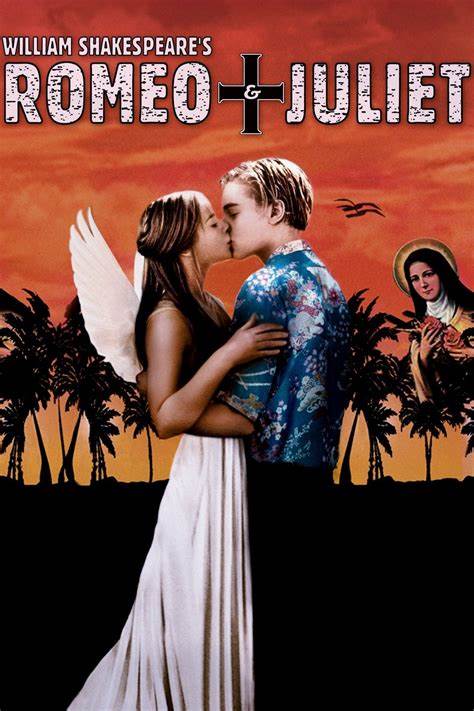
Shakespeare set the standard, I believe, in his play Romeo and Juliet. While the principal characters seem to be in their teenage years, film depictions typically show Romeo as being, say, 16 and his love interest Juliet as being 13 or 14. (No more than 18 and 16, respectively, I'd say.) At any rate they are not considered adults in the play or in films. Yet they meet, fall in love, and...consummate their love (well, on celluloid). In the 1968 film we get a waking up in bed together scene, complete with a bit of gratuitous nudity. Nudity in a scene is not, in my estimation, a marker in itself of erotica.

I was too young to see that film when it came out, given its rating, but seeing it later, as a youngish curmudgeon, I thoroughly enjoyed the depiction of young love. Only after a few decades did I realize that what "got to me" was the sense of memory the film brought out in me: the flashes of love I recalled feeling at this or that moment in my youth. Having always been a Romantic, I was more interested in a love-interest than merely a sex session - but that's a discussion for another time, likely in my therapist's office. A stream of "young sex" films shot forth during the '70s, culminating in the borderline kinky Blue Lagoon.

In writing my forthcoming novel, FLU SEASON, I willingly took myself back to that fateful time in junior high school when I had my first "crush". It was magical, to say the least. At the end of the school year, the whole class (a small school) had a field day at the local lake, and we suddenly found ourselves walking hand in hand down the tree-shaded trail...but with her jealous gal pal following us so we couldn't have a moment to ourselves. But when she got fed up with her friend not giving her any attention, she stormed off and we finally had a moment for that glorious first awkward kiss. But I digress....

In short, we were all young once, and in love for the first time, and that experience, good or not so good, sticks with us. If we have pushed it back out of the way, closing the door to that room, as it were, then the right story or a movie may unlock that door and there we are: back in that flash of feelings that once overwhelmed us. That is the beauty of youth, of first encounters, of that frozen moment in time which is not naughty or vulgar but a confirmation of our existence and our ability to love beyond ourselves. It is a necessity in our development. Without certain milestones in our development, according to psychologist Erik Erikson, we do not develop normally. 

So I finally did it! My forthcoming "pandemic" novel FLU SEASON features what I think is a nifty teen romance - what could be called YA erotica. In my defense, I believe I've balanced quite well walking the tightrope between a believable encounter between two young people and what may make readers uncomfortable. The narrator of the story is a just-turned nineteen year old son of the main character ("Mom") who meets his 16 going on 17 year old cousin and falls instantly in love. But, fleeing the chaos of a city ravaged by pandemic, times are hard, and hard decisions need to be made, as his 30-ish single Mom keeps reminding him, the product of young love himself. As the story of fleeing danger and seeking sanctuary unfolds, the love story also unfolds, in a sweet way, then with more urgency, both characters recognizing their feelings for each other and eventually doing something about it, something which will change everything...and give us a trilogy rather than a stand-alone novel. 

But enough spoilers. FLU SEASON: The Book of Mom comes out later this year. Cover reveal soon. Look for it on your favorite YA erotica shelf. And remember: nobody will know what you're reading; they will only see the cover, which suggests an apocalyptic sci-fi story, not the steamy exploration inside - or Mom's constant teasing of her son about needing to repopulate the world once the pandemic ends.


--------------------------------------------------------------------- 
(C) Copyright 2010-2022 by Stephen M. Swartz. All Rights Reserved. No part of this blog, whether text or image, may be used without me giving you written permission, except for brief excerpts that are accompanied by a link to this entire blog. Violators shall be written into novels as characters who are killed off. Serious violators shall be identified and dealt with according to the laws of the United States of America.

15 May 2022

What could go wrong?

FLU SEASON - a pandemic novel, part 4


We have all been through it, whatever 'it' may be: the lockdowns, the protesting, the looting, the shortages of food and supplies, the worry, the fear, the numbness of being helpless. It is the stock footage of most "post-apocalypse" novels and films. And our reality the past couple of years - and others back through time when things just didn't seem too good and people had to deal with their world.

When I started to write a 'pandemic' novel during the first lockdown period, thinking I could fill my time best that way (while teaching virtual classes for the second half of the semester), I realized my first mistake: trying to write about the very thing I was living through. It all seemed surreal to me and other sci-fi writers who had been through it before via stories we'd read. I did manage to start planning what became my pandemic novel FLU SEASON and, two years in, I've now completed it.

The first thing I did was think of what could happen in the actual situation around me. I refused to go full Mad Max or, as a working title, the A Boy and His Dog film version of a post-apocalypse situation. For us, it was a virus, hence pandemic (rather than, say, a nuclear holocaust) that shook up everything. But I didn't want to get into discussions of disease and health care, so I didn't want my main characters to be medical or science people but ordinary citizens.

So as society broke down around them, what would they observe? I imagined going two ways:

1)
Less Freedom to move about, to purchase or otherwise obtain needed items such as food, water, fuel, medical supplies, toilet paper, weapons and ammunition.

2) More Freedom to move about, breaking into stores and homes, taking whatever was desired or needed, ruling the streets through might and fright, making your own laws. 

I suspected most people would fall into the first category. They would obey the laws, the mandates, the changing customs as best they could...until they stopped and refused to go further, at which time they would either revolt or succumb to hopelessness and death. Or they would flee a worsening situation - which makes a better story. Have an escape plan! At what point will you 'pull the trigger' and run away from all you have in the world for the lonely trek through a lawless landscape?

Those in the second category would get right on it, exercising their newfound command of the streets, law enforcement too strained to respond to everything. In films we typically see rioting, people protesting their mistreatment, demanding justice, eager to fight each other for a piece of soylent green or worse: actual, unprocessed meat. They would be less concerned for what may be corrupting the environment than those people in the first category.

But let's go with the people in the first category: They flee the harsh and dangerous city. They have a plan: go to the grandparents' farm to wait out the pandemic. It will be safe there. If they must, they can eat the farm animals. Then the story becomes what happens along the way. Unlike A Boy and His Dog, where our heroes traverse an empty nuclear wasteland, in FLU SEASON the trip out of the city is full of traffic jams and fighting among people trying to leave - but they know this will happen and so take to the lesser roads, winding through the rural areas where everything seems as it should be. You could almost forget there is a pandemic ravaging the world.

What can happen on the journey? We might first worry about our vehicle and its fuel, which will run out eventually and not be replaceable. Full tank to start with full cans in back as spares. Even electric vehicles will fail when charging stations (assuming there are any far from a city) are no longer supplied with electricity from power plants. You stock up and take food and drink and other supplies with you, but these will run out as you use them up. You will need to stop for restroom breaks - but what will be open given the situation? And would you trust this odd toilet during a pandemic? Drinking fountains and bathroom faucets would most likely be turned off - as many were from the start of the pandemic, discouraging people from sharing them. 

So far, it's not too different from the usual road trip. However, you are out on the road, where help is not too easy to come by. And even the 'help' may be dangerous: yes, there are good cops and bad cops, but which will you get when the lights flash and you pull over? They can do whatever they wish with you - especially with new laws regarding vaccination cards and face masks giving new excuses to harass travelers. Meanwhile, rioters, looters, and other criminals run rampant in the city but not so much in the rural areas. That doesn't mean the rural areas are safe: country folk may have their own ideas of right and wrong and see a lone vehicle as an opportunity to "get me some o' that".

Basically, you have one shot to make your escape: one fuel supply, one day on the road, hoping not to encounter anyone because you don't know if any of them is safe (not infected) or dangerous (violent). You must assume everyone is a threat. You think you can handle whatever may come at you but you have your teenage son with you. And you have your precious heirloom tuba that you'd rather not let get harmed. But you can make it to your parents' farm, expecting to find comfort from a difficult life in the city, and not what you actually find when you finally arrive there.

Then you'll need a new plan, one which takes you into even more dangerous territory....

NEXT: Setting up a New Community (a.k.a. Let's rebuild society in our own perverted style)


--------------------------------------------------------------------- 
(C) Copyright 2010-2022 by Stephen M. Swartz. All Rights Reserved. No part of this blog, whether text or image, may be used without me giving you written permission, except for brief excerpts that are accompanied by a link to this entire blog. Violators shall be written into novels as characters who are killed off. Serious violators shall be identified and dealt with according to the laws of the United States of America.