
First, I'm supposed to acknowledge the person who is making me do this. That would be my fellow Myrddin author Connie J. Jasperson, who is constantly poking and prodding me about everything from absolution to berserkers, cadavers to doggerel, elementals to fantasy games, and on to happy institutions that juxtapose karma and lingerie, and much more; nothing opposing pedantic quiverings, surely, though ultimately variety wins (and xylophones--yes, zealously). It's really exhausting sometimes. (Kidding!) Her blog is Life in the Realm of Fantasy.
So I've decided to humor her and indulge myself on the strange topic of the process of writing, especially the writing of my novels.The first step of the process of writing about the writing process is to list the steps.

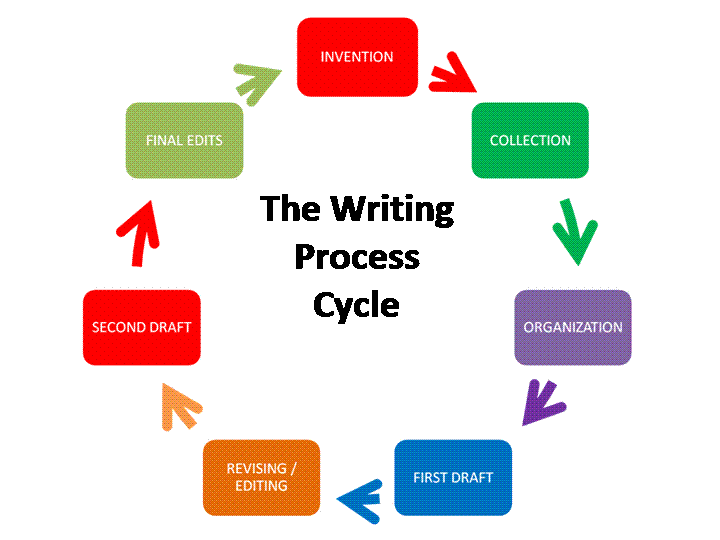
The Writing Process
There have been blogs in the past where I contemplated writing about my writing process but it always faltered because my process varies from project to project and the seasons and the quality of coffee I consume and other factors. Hard to nail it down. It may also be ironic to note that, in my day job, I am tasked with teaching such a process of writing to college students. It's like a song I play over and over every semester. And it goes a little bit like this:
1. You get an idea by reading, surfing the internet, talking with friends, brainstorming, drawing out a map, web, cluster to visualize things, thinking a lot, or just simply asking your teacher "What should I write about?" or, in more terse terms, "What the heck do you want?"
2. Then you organize your idea, keeping in mind the format of an essay and balancing that with your audience and your purpose in writing about the subject of your choice. We will need a beginning where you introduce your subject, a middle where to explain and give details and examples about your subject, and a conclusion where you make your readers feel all warm and fuzzy about your subject.
3. Drafting comes next. That's where you hammer out your ideas. You don't have to start at the beginning and write through to the end. You don't need to thrash about in anguish if the words don't come out perfect or beautiful the first time. Just start. Open thy mind and summon thy muse!
 4. When you have the draft finished, read through it and see if your ideas flow logically from one to the next one. Check organization of paragraphs. Look at the thesis statement (your whole essay stated in one sentence) and each of the topic sentences (what the paragraph is about). Make sure you have something which "hooks" your reader's attention at the beginning and something poignant or clever which closes your essay.
5. Edit and proofread. Several times. Do not rely only on the spellchecker function of your word processor application. Read it at least once with your own eyes (fifteen times is better). However, your eyes can be fooled: try reading aloud once and you'll likely hear some problems your eyes did not catch. Have someone else read it to get another pair of eyes on the text. Look for problems with syntax, especially sentences with comma splices or sentences with no punctuation (run-on sentences), or fragments which are not complete sentences. (I actually have a complete and exhaustive checklist of everything that can go wrong with an essay writing assignment that I give to my students.)
6. Finally, publish that thing. For school, that means give your paper to the instructor who will evaluate it and assign it a grade. For the real world, that means sending it to someone somewhere in the hopes that he or she will find it so worthy as to not only give it a grade but go through further steps to share it with the world, and perhaps pay you for that privilege. Movie rights sold separately.
These are the steps in a quick-and-dirty synopsis. The reality is much more eclectic. More so if the writing is fiction rather than expository writing in an essay format.

(It occurs to me, checking back on my set of instructions, that I am covering the material in reverse order, but, this being my blog, I shall not care.)
Getting Ideas
When I am writing a novel, the initial idea comes from any of a hundred possible sources. There is no one pattern. It comes as a bright splash of color erupting in my mind while reading, seeing a film, having a particular life experience, or couched in a dream. A moment caught in time, as it were. Yet before I can do anything more than have my next heartbeat, my mind runs off with the idea, unfolding an elaborate scenario before my mind's eye and creating a narrative several levels beyond its spontaneous beginning until I manage to pause, exhausted, and struggle to recall where I was and what I was doing when that emotive outburst stunned me. It's often a curse, often a blessing. Then, when I finally have the chance to sit down and begin writing this new idea, I simply chisel out an interesting or significant scene: perhaps the one which started it all, not necessarily what will be in the first chapter, but something, anything, just to play with it, see where it will go, see if it has possibilities, see if it interests me enough to keep working on it.

For example, my romantic action-adventure novel AFTER ILIUM (2012) began in a graduate class on Classical Rhetoric where we read and discussed the Encomium of Helen. It was the Greek Sophist Gorgias's defense of Helen as the victim of an abduction and cause of the Trojan War rather than willing accomplice of Paris (the result was that they welcomed her back to Greek society without retribution). Immediately, I contemplated a modern scenario which would parallel the ancient story. So here is Alex Parris, fresh out of college, meeting a seductive older woman, Elena (Greek for 'Helen'), on an Aegean cruise and their subsequent visit to the ruins of Ilium/Troy. I ran with it.
My campus anti-romance, A BEAUTIFUL CHILL (2014), began with some real life experiences, minor as they were, which snowballed through the rest of the school year, following the rhythms of the academic cycle as well as the seasons, as I role-played a what-if scenario much as I described above. I did go to a reading by the visiting writer-in-residence one Friday night, which happened to also be Halloween. There was also an art exhibit going on in another part of the building, and there I did encounter that redhead beauty, an art student, who became the female lead in the novel. What if...? Later in the novel, the male lead teaches a Shakespeare course; in reality, I took that course as a graduate student. It fit nicely into the flow of the novel.
As for THE DREAM LAND trilogy (Book I 2012; Book II and Book III 2013), I've written of its origins previously on this blog. To summarize: my childhood fantasy games with imaginary playmates evolved into a compilation of quasi-militaristic scenarios on an alien world--simply because I did not want to fit my ideas into the real history of Earth. Then, years later, I had a dream one night which so provoked me that I had to start the novel; that dream was the opening scene of the novel through many, many revisions until finally being pushed back a couple chapters in the final version of the novel. At the time, I thought it would be a single, stand-alone novel, but, thankfully, ideas remained--questions remained and needed to be answered. In fact, I was deep in the middle of Book II when this new hobby of blogging entered my life so I began blogging about Book II as I was finishing it. Indeed, the name of this blog comes from the setting of this novel. Then Book III exploded through my psyche last year, consuming 30 hours of every day. (I could write a fourth book, I think, but that would ruin the concept of a trilogy.)

Other novels I've written, which are awaiting fresh revision, include AIKO, a novel of Japan written while I lived in Japan. Ironic, huh? The idea came from a local news story and, to me, seemed reminiscent of the Madame Butterfly opera, so I tried to tell it from the man's point of view. With significant revision, I entered it in Amazon's Breakthrough Novel Award this year but it did not pass the first round, where a 300-word description must entice a nameless judge to desire more.
YEAR OF THE TIGER began as a sci-fi story of a man hunting a monster on a far off world. Using the story in a college English class, I transplanted the characters to Earth and chose the tiger as my hero's nemesis. It went from longest short story to screenplay during a subsequent college class and one long summer even later, it became a full novel. Again, the what-if motif: What would it be like for a man if he shared his consciousness with a wild animal, say, a tiger?
THE LAST SONG is a post-apocalypse musical. Structured in four movements like a symphony, readers quickly come to understand they are in a futuristic opera where the conflict over the last possible combination of notes in a society surviving only through their obsession with music serves as catalyst for violence. What-if again: What would a society obsessed with music be like?
My first longish work, started in high school as a novella (composed paper page after paper page on a manual typewriter!) then transposed as a screenplay in college, was THE LIE (original title: In Pursuit of Happiness). It was basically a 1984 rip-off of a totalitarian society, but its saving grace is that I set it in a small town in California--which for most of the story seems to be a 1930s Nazi-styled corner of Europe--and it is eventually overthrown, unlike the society in Orwell's novel. (Please ignore that spoiler.)

Now, to get back on track with this blog hop protocol. I'm supposed to begin with addressing this question: What am I working on? I can do that while also continuing to riff on the "getting ideas" theme.
My current work-in-progress is a novel I'm calling A DRY PATCH OF SKIN, which is what I like to label a "realistic vampire story"--my first paranormal book. Even in childhood I was never one to believe much in magic; I expected a scientific explanation for everything. That may seem to go counter to my one-time childhood aspiration to embark on the amazing life of a stage magician. The idea no doubt came from all the current vampire-themed books, movies, and television series, none of them of much interest to me although I saw several of the Twilight films and have read Dracula in my youth and I've seen the 1992 Gary Oldman film version. The whole notion of vampirism never piqued my interest--until recently.
 What pushed me to actually start writing such a novel probably came from two sources. Again, there was a real life experience which my mind latched onto and ran with: a personal brush with morbidity coupled with meeting someone special, then filling my mind with all sorts of depressing thoughts. Also, strange to admit, the cover image of fellow Myrddin author Shaun Allen's book SIN. The cover depicts a man's face in a rather horrid state of decay. I'm sure the intention was as a metaphor for the decay of the protagonist's soul, that is, his morality.
Yet it reminded me of a report I saw long ago on one of those television news magazine shows about a man who really suffered from a disease which mimicked the characteristics of vampire legend. He could not go out in sunlight lest his skin flake away; his appearance was hideous (yet he had a wife and children, presumable prior to his transformation); he got some relief by ingesting blood. Thus, I merged all of this and decided to see if it would go anywhere. Now at 60,000 words, just past the mid-point, it seems likely I can complete it later this year.

Now that I've frittered away my blog time, I've only partially completed my assigned task. I am next supposed to address the question How does my work differ from others of its genre?
That is a loaded question because I am writing now in three different genre. I began in my teenage years in science-fiction, leaning sometimes into fantasy; I seemed to do better keeping it more sci-fi than fully enter a magical realm. Personal tastes. I read a lot of Ben Bova, Andre Norton, Isaac Asimov, Clifford D. Simak, Arthur C. Clark, Ray Bradbury and others like them. Then I gradually shifted to Robert Silverberg, Michael Moorcock, and Roger Zelazny. I never had patience for such figures as J.R.R. Tolkien or C.S. Lewis. I liked my sci-fi edgier (this was admittedly before cyberpunk came along) and sexier (as an adolescent boy, that seemed a natural inclination). So, as many writers claim, I wrote what I wanted to read. Thus, my sci-fi trilogy THE DREAM LAND is the kind of story I wish I could have read while growing up, just naughty enough to keep it interesting, just scientific enough to make things plausible, just "magical" enough to make plot elements fit together smoothly.
But I also write literary romances--or, as I like to call them, "anti-romances" (which is the reason they are rejected by traditional Romance publishers: things don't work out in the end for them as a couple, but one usually becomes empowered and moves on to bigger and better things). In the MFA Creative Writing program I went through, I was pushed to write more urbane, New Yorker-style stories full of realistically quirky characters with snide wisdom who have problems which are grave to them yet hardly worth a whimper to readers. I never found that niche. I tired.
During that time, I fell into the story that became in the next year (after living through that year's events) my novel A BEAUTIFUL CHILL. It could be called a campus romance, because that is on the surface what it appears to be, but I hope I have infused it with plenty of "details" that give it a wholly unique feel. I was quite proud of myself for crafting such a "realistic" (i.e., not sci-fi) story that was "deep" and "emotive". However, it has had a long journey, never finding the right publisher willing to take a chance on something that did not fit neatly into a marketing category.
AIKO, my Japanese "love story", is literary, as is AFTER ILIUM--both books in which male meets female and gets into trouble, tries to get out of trouble, hopes for the best at the end. One ends happily, one doesn't.
And then there are the oddities. YEAR OF THE TIGER is a work of magical realism. That is, a story in every way believable and plausible for contemporary society except for one particular "fantastic" aspect, usually something upon which the whole story depends. The mental connection between the tiger and the man who is hunting the tiger is the magical element in an otherwise straight hunting tale.
And THE LAST SONG has the basic elements of post-apocalyptic stories but I've added the musical elements, playing that aspect for laughs and for pathos.

I think I may also have inadvertently answered the next question: Why do I write what I do? But let me add something more.
Quite simply, I write stories which intrigue me. The what-if scenario. If this happens, then what? Given two people like him and her, what would happen? It's a kind of curiosity, I suppose. What would it really be like if two teenagers found an invisible doorway to another world and got stuck there? Seriously, what would they do? Freak out? Learn to function? Try to find a way back? Those were THE DREAM LAND questions, of course. I tried to depict two such people as I believed they would naturally react to that scenario, that situation. On short, I write the kind of books I want to read. I hope other readers may also want to read something a little off center, a bit to the edge of the genre or cross-genre, something not quite the usual or fitting cleanly inside a formula. I like twists and turns, and threads which do not always tie neatly by the final page.
This brings us back to our initial inquiry about "my" writing process....

Above, I briefly described the writing process I promulgate to my students. To some extent it holds true for any writing task. Even for fiction. However, fiction is more delicate, more fragile, and the idea of a story is subject to so many more mini-steps than some academic essay. I would need to address "my" personal writing process in light of each book, requiring about a year's worth of blogging. I've described the "getting ideas" step. The next step, drafting, usually requires me to craft scenes. I began using this approach when writing A BEAUTIFUL CHILL and have employed it ever since.
The one great thing I learned in my MFA program came from a visiting writer-in-residence one semester. David Huddle, whom I'd never heard of prior to his arrival, taught the formula which I've come to call the Aria - Recitativo structure. I forget what he called it, but we read many examples of this two-pronged attack strategy. Rather than get bogged down thinking of a whole story, focus on one scene. A scene is a moment in time, written and read in real time, moment by moment. It shows characters acting, speaking, living--which moves the story along. Between the scenes is what is called exposition. It is a compression of time and events, because they are not so interesting in themselves and they are of little consequence. We need them to get from one scene to the next, so we tell something to bridge the gap. We could say that the scene is the "showing" while the exposition is the "telling" part of the story.

So we have two parts of a story: the scenes and the exposition. In operatic terms, these are the Aria and the Recitativo. The Aria is a set-piece where the actors/singers stop the story and sing a song about how they feel or what the problem is or anything else that reveals something of the central issues of the story separate from the story line itself. Then we are into Recitativo ("recitation"), which is simply the information we need to move us on to the next Aria. People don't go to opera for the recitativo, nor do readers buy a book for the exposition passages. But they are necessary for tying aria to aria and scene to scene.
Granted, this is a simplification of both the opera structure and the structure of a novel, but if you examine contemporary novels, you are likely to see this structure. I've also heard it said that this writing style, this system in particular, has come about in parallel with the film industry. Younger writers write prose as though they are seeing the action in a movie. Readers, experienced with shorter, more succinct and set narrative patterns of television and film, seem to prefer this structure, as well.
So that is the bulk of my process of drafting. I seldom create a full outline but rough it ahead a few chapters or scenes. For example, I need a scene to show X or a scene where Protagonist realizes Y or decides Z. Often I begin in the middle of a scene and fill in what-happened-before as I go on with the scene. I try to avoid starting a scene with a setting description, at least not a long one. Knowing I have a tendency to wax poetic with wonderfully adroit metaphors, I try to keep the writing as lean as I can. Once in a while, especially where characters emotions are revealed, I allow myself a worthwhile indulgence of verbosity. Editors hate me for that, of course.
At each writing session (that is, when I have no particular schedule that would limit my efforts), I begin by reading what I previously wrote and editing as appropriate. That activity gets me into the story once more and when I have arrived at the point where I stopped previously, I am ready to charge ahead into new territory. Occasionally, I may awaken with a new scene in my head and I will write it out before determining where it should go in the story. Sometimes, I wake up and write the scene that is in my head without editing the previous section first. Sometimes, I just stare at the computer screen waiting for the muse to whisper into my ear. While waiting, I drink a lot of coffee.
I also like to play "soundtrack" music which sets the mood for the scene, or for the story in general. For example, as I write my vampire book, I dare play music from the films of Twilight, although it does not cause me to borrow anything else. The music must be without English lyrics because that distracts me from the words in my head. While writing Book III of THE DREAM LAND trilogy, a fine collection of "Epic" music, typical of video games and sci-fi films, served me well. (See a sample here.)
I have two writing sessions: morning and night. Mornings are good for editing and building on previously written text. Night is best for fresh composition--providing I can get motivated. The irony is that I must be exhausted physically and mentally before the words come easily. Mornings, I tend to trudge in zombie-like to the computer and start typing without too much "waking up"--even as the coffee is being made. I think in both cases, my filters are down and that allows unobstructed creation. My typing is better in the mornings, for some reason. The more I awaken, the sloppier my typing becomes. Those muses! Such pranksters!

Revision
When I have finished a novel, I follow the usual protocol: give it some time to settle, then read it fresh from the top. I do a thorough edit, scene by scene, chapter by chapter. Because I think a lot and mull it over for sometimes quite a while before actually typing, and because I edit as I go, I am usually pleased with the initial result. THE DREAM LAND Book III was my "dream" project because it flowed so easily and smoothly that it came out nearly perfect (in my humble opinion). I blame years of training and lots of coffee and a summer free from distraction for that miracle. Only in a few scenes did I struggle to get it right, changing the words and then later changing them back several times until I said to myself "Enough!"

My current project, A DRY PATCH OF SKIN, flowed well from the start but bogged down when I had to pause to do research. Then I got it flowing again but once more had to pause to do research. I finally decided to just write it straight through to the end and go back later to add in researched information, in this case, medical data. Each project has its own writing process, obviously, and each kind of story may also have its own method of creation. I try not to judge, but go with the flow. My muses seem to know what's best, although they often trick me and laugh at the results.
I know some of my quirks in writing, the set phrases I seem to use over and over. I know I tend to overuse certain words. Therefore, as a final step, I usually run a check of those particular words and phrases and edit each one personally, according to the situation in the scene. It is a laborious process, but I am old-school and do not trust technology to do everything for me exactly as I wish it. I have been tricked before. So I take the time to look with my own eyes at every instance of imperfection and fix it myself. Yes, I do suffer for my art. It's also why I wear glasses.
So that is something about how my writing process works. In short, it's a rough process at best, and the devil is somewhere between the details, waiting for opportunities to thwart my good intentions. The other side of the writing process, as all writers know, is that without the writing we nearly cease to exist. I cannot go very long without having a project to work on, either writing something new or working on an existing or older project preparing it for publication, no matter how long that takes. Otherwise, I wither and die. Nothing keeps me alive like the desire to know what happens next. And I won't know until I write it.

NEXT WEEK
Finally, the last step of this blog hop business is to divulge who gets hit next: in other words, who is next on this tour de writing process. Who will they be? Perhaps it shall be a surprise. Everyone likes surprises, right? Once I know who our lucky bloggers will be, I'll update this blog entry. Fair enough?

PS--Thanks, Mom, for buying me that Smith-Corona manual typewriter when I was in junior high, and the IBM Selectric typewriter when I was in college. And all those reams of paper. And then staying out of the way. Now please buy my books! Oh, and Happy Mother's Day!
---------------------------------------------------------------------
(C) Copyright 2010-2014 by Stephen M. Swartz. All Rights Reserved. No part of this blog, whether text or image, may be used without me giving you written permission, except for brief excerpts that are accompanied by a link to this entire blog. Violators shall be written into novels as characters who are killed off. Serious violators shall be identified and dealt with according to the laws of the United States of America.


