Showing posts with label aria. Show all posts

19 December 2021

On the Compression of Time

Greetings! 

Welcome to the last blog post of this year, a not so prestigious milestone in a year of diminishing blog posts. I've been busy deciding how best to do nothing. Writing is my only escape. That's my story, anyway. To keep the record consistent, however, I am uploading this post. Time flies, even with a broken wing, so this post is about time in fiction writing.

When I was writing my semi-biographical novel A GIRL CALLED WOLF, I was working from the events of a real person's life - a remarkable narrative, I believed, and worthy of telling and sharing with the world. I had gotten to know the story's real heroine via Facebook (we had a mutual friend), and I interviewed her about her childhood in Greenland and what followed. However, when transforming someone's real life into a fictionalized version, I was struck by the conundrum of how to end the novel since she would continue on in real life while the novel would have an ending.
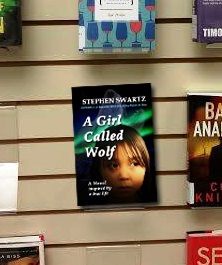
Taking the events of a life, twenty-five years at the time, and hitting only the highlights and omitting the rest is often a recipe for a cheesy Hallmark movie, which was not what I wanted. I had to put myself in the mind of a child describing an unfamiliar world, then as a teenager with teenage problems, then be a young adult discovering new worlds and adapting constantly to changing conditions. That was the kind of narrative that intrigued me, hence my desire to collaborate on this "based on a true life" novel. (You can read more about this project here.)

I learned clever ways to compress the timeline, sometimes going medias res (starting in the middle of the action) and backfilling needed info, for example. I divided the novel into longer chapters which corresponded to phases in her life, based on different locations as she moved from one home to the next. It was rather like writing a fantasy quest story but set in modern times - albeit with primitive conditions at the outset. It begins in the arctic and it ends in the arctic. The ending I chose, approved by the woman whose story I was writing, brings us full circle and provides symmetry and offers a profound message about resilience. 

For those readers who wish for an update (no spoilers for the book), Anna is quite well, living her life in Winnipeg, Canada - from where we last saw her heading north in the book. She had a real arctic adventure (with better results than in the book) during the covid crisis in 2020 working med-evac communications from a town in Nunavut. All is well with her and her son - and a new baby. 

A timeline story like A GIRL CALLED WOLF is what I seem to be writing now in my work-in-progress, POST. The chapters and the scenes within chapters parallel the day to day experiences of the cast. Some days are more interesting than others. I expend more text on the exciting days and next to none on the routine days. Such is the quirk of narrative. It's whatever the narrator deems worth narrating. In this new novel - a post-pandemic / post-apocalyptic tale of a boy and his mom and her tuba - I recount how they fled from a chaotic city hoping to survive in the countryside but finding dangers along the way. Changing plans and directions several times brings them to a new destination but one where all is not what it seems at first.
So again I am faced with telling the story of a family and their activities day by day. To speed things up, I skip days. I compress time. I slow down for real-time narrative and go into overview mode to get to the next interesting thing that happens. It's rather like the opera method (read more here) where the scene with the moment by moment action is the aria - a full set piece that displays detail, emotion, and purpose - while the other parts of the story are needed only to move you to the next aria, what we call the recitative. I enjoy writing the aria scenes (though often complex and challenging) and manage to type out some kind of recitative during the drafting stage to be filled out better later.

I find that I'm starting scenes ("sub-chapters") in my new novel most often with dialog, even as a short phrase, then filling in what's needed to know via the ensuing conversation. Otherwise, I begin with a setting description. For important plot points, you have to write out the scene in the detail you would find if acted out on stage. Cannot compress time, cannot gloss over, cannot merely suggest or hint at. You must write it out as though choreographing every movement and every utterance precisely. All right, yes, you can skip over mundane talk: instead of exact speech in quotation marks (e.g., "I shall go forth and write," the bard proclaimed.) you simply say what the character said without having to write out what he said exactly (e.g., The bard proclaimed he would go forth and write). 

Where's my books?
At 95,000 words, I should be nearing the end of my new novel. However, the way the story is proceeding, I could follow the cast members' adventures forever. I only need to invent more things for them to do. If not, I shall have to end it sometime, somewhere, somehow. I'm currently wrestling with how to end the novel. I have three ideas: a happy, hopeful ending; a sad/tragic but inevitable ending; or the vague could-go-either-way ending full of profound meaning. Place your vote in the comments below...and then go have yourself a wonderful holiday season.

Many thanks for your continuing patronage!


--------------------------------------------------------------------- 
(C) Copyright 2010-2021 by Stephen M. Swartz. All Rights Reserved. No part of this blog, whether text or image, may be used without me giving you written permission, except for brief excerpts that are accompanied by a link to this entire blog. Violators shall be written into novels as characters who are killed off. Serious violators shall be identified and dealt with according to the laws of the United States of America.

26 April 2020

The Solitude, part 5

The good news* is that some of us have been given permission to return to our usual way of life, our old habits, the normal things we are used to doing. For me, that includes the launching of my latest novel, EXCHANGE, which has been delayed because of the changing circumstances of life in general. I lovingly describe it as a crime thriller because it involves a big crime followed by on-going crimes and the main character has to keep trying to deal with the cascade of trouble. Mostly it's about the issue of gun violence in America. (More on that touchy subject next time.)

*The bad news, by the way, is that some of us haven't yet been given permission - as though we are in kindergarten and need to ask the teacher for permission to go by ourselves to the restroom!

For this week, I need to rush headlong into the next step in my writing process, a process I paid attention to while writing EXCHANGE, just so I could tell you about it.

Part 5

When I'm heading into the middle of the book, it is subplot time. Some of those are already part of the original idea, the obstacles the protagonist must overcome. Others are just some seeds I toss in hoping to harvest later in the book. Often they do not blossom so I must go back during revision and rip them out.

Depending on the genre, I might make a rough outline of events, at least chapter by chapter as I go, or I will simply press ahead and let the story unfold in whatever manner it does, almost as though I am merely taking dictation from the muses in my head. I like that feature of writing: letting it happen. If you read enough you get a sense for how a story should unfold and get a feel for the timing of things happening.

There seem to be patterns we absorb as readers that stay in our heads to shape plots and enforce genre demands. This allows me to skip a formal outline or detailed plotting. If I need to, I will slow down and write some short ideas about a scene, but I seldom do more than that. If a difficult-to-write scene is coming up, I may take a break from writing while I think it through in my head, or sometimes do some research. (I'll keep the story in my head during this time by editing what I've previously written.) Because I tend to get into the head of my protagonist and try to think like him/her (thanks Acting 101 class in college!), I feel the same emotions as my protagonist (or whichever character I'm writing), so it often takes an emotional toll on me. Yes, sometimes I cry when I've made my characters do something bad and feel proud when they do something good.

Along with subplots - which, for me, will come to fruition alternating with main storyline scenes - are other characters. Pretty standard for me: protagonist (narrator), sidekick or assistant, love interest, but I do not usually have a true antagonist or villain. I believe firmly in the antagonist being a protagonist in his/her own mind. Only in my vampire trilogy do I have a true villain bent on destroying the hero. In most of my books, what hinders the protagonist are elements of nature or other people just getting in the way, not really seeking destruction. That seems more realistic to me, even in an epic fantasy.  


So this takes me two-thirds of the way into the story - where I need to start planning how to stick the landing. Because I usually already know how the story will end, it is simply a matter of wrapping up storylines, as I do in Part 6.

NEXT: The climax. And maybe a complete explication of why I wrote EXCHANGE.


---------------------------------------------------------------------
(C) Copyright 2010-2020 by Stephen M. Swartz. All Rights Reserved. No part of this blog, whether text or image, may be used without me giving you written permission, except for brief excerpts that are accompanied by a link to this entire blog. Violators shall be written into novels as characters who are killed off. Serious violators shall be identified and dealt with according to the laws of the United States of America.

19 April 2020

The Solitude, part 4

This extended period of time wouldn't be too different from my usual summer vacation, except for not having a movie theater to visit or a bookstore to browse in. I thought initially that I would get a lot of work done, perhaps start a new novel, but like in the past, when I have a lot of time I tend to waste it while I can be incredibly productive in short bits of time, like an hour off between classes. However, I still remember my traveling lecture about my particular writing process, so I'll keep going.

After I've gotten the idea and toyed with it a while to be sure it's something that would make a good story and I've played around finding the narrator's voice, I'm ready to go. I envision the opening scene, something appropriate to the story, maybe our hero or heroine doing something typical or something out of character. It depends on the story and the genre. The first rush of key-flinging is exciting but then...


Step 4

When I get to around 10,000 words, I have to think ahead about what should happen. Because I usually have the ending in mind when I begin - or at least by the 10,000 word mark - I need to add the required obstacles and detours and dangers I think what would be logical for the story and the characters' world view as well as being interesting in their own right.

Some of my writer friends like to plan out everything in a formal manner. Not me. I like to get into the head of my protagonist and try to think as he/she would think - like an actor taking on a role - and let the next thing happen as unexpectedly for me as for my protagonist. If I do any planning of interim events, it's seldom more than a list of event keywords, like "dragons attack" or "pervy photog, Bill intervenes". I'll work out the details when I get there. When I have tried to outline in more detail, like some colleagues do, I always drift off it fairly soon and even when trying to return it just becomes a whole new outline - like there are so many versions of a story in the multiverse.

A lot depends on the genre, of course. Each genre has its own requirements or traditions. I know I must include or follow some of them, well enough to honor the genre, but if I write the same things then it won't be good - and not so interesting to me. So I always try to write a little askew from the norms. Yes, most epic fantasy crime romances go this way, so I will make a change here and twist it there to be different. I get a lot of cross-genre hybrids that way. But I don't care; if the story interests me, I keep writing.

If the story stops being interesting to me (yes, there have been a few), nobody else ever sees it. The effort to make it interesting - not to mention believable for the story's situation - is what makes writing difficult. You know where you want to go but aren't sure the best way to get there. That is my number one frustration while writing.
In my current Work-in-Progress, given the way the book opened, at the 10,000 word mark I made sure to give my protagonist new problems to have to confront. As a contemporary story, the problems are obvious and don't require me to make a list (outline). However, while driving around, for example, I may have a thought pop into my head that reminds me to add this or that. What if this happened? Wouldn't that be awkward? How would he react? Like a psychology experiment. Sometimes I must go back to an earlier scene to put it in a new predicament - the curse of not outlining before writing. Sometimes I keep a list of things that need to be added and I will put them in at a good place in the story during revision.

Moving the story along to the mid-point is an exercise in mini-dramas and dramatic arc which are limited to a chapter. I like the aria and recitativo model taught to me by author David  Huddle during my MFA program. As a former music student, I understood immediately the operatic concept. The aria is a real-time scene with dialog and details that explore the situation, feelings, motivations, and develop character and move the plot forward. The recitativo is simple exposition which takes you to the next aria. It should not have any important revelations in it. String a bunch of arias together and you have a full opera.


The main idea is that writing the beginning, up to 10,000 words is a different kind of writing than the rest of the book. Then I must shift into what feels like a completely different frame of mind. At this point, I also start thinking of the story throughout my daily life. Thoughts pop into my head at random. Then I cannot keep from returning to the keyboard.

Next: Subplots.


---------------------------------------------------------------------
(C) Copyright 2010-2020 by Stephen M. Swartz. All Rights Reserved. No part of this blog, whether text or image, may be used without me giving you written permission, except for brief excerpts that are accompanied by a link to this entire blog. Violators shall be written into novels as characters who are killed off. Serious violators shall be identified and dealt with according to the laws of the United States of America.

21 May 2016

The Mother of All Writing Processes, Part 2

Remember that Writing Process thing from last week

First you get an idea, then you write it. Simple, isn't it? 

If you're writing an essay for a class, just follow the basic pattern that was outlined in ancient days by one cool Greek dude named Aristotle. That's right: he was so cool he only needed one name. His brilliant idea was that every speech (writing wasn't too cool back then but everyone liked speeches) had three parts: Beginning, Middle, and End. It's hard to believe now that nobody had thought of that until Aristotle did. Today we call those three parts: Introduction, Body, and Conclusion. Got it?


The reason there are three parts is because each part has a particular function. The Introduction introduces the subject of the essay or speech and sets up your audience to want to read (or listen, if it's a speech). The Body is where you present examples or other information that develops, explains, or illustrates the subject you are writing about (or speaking about). The Conclusion is the last part; it's where you summarize your idea, maybe ask people to do something, and wrap it up so your audience feels good.


The same is not true of fiction writing, however. The rules are made to be broken - which is the reason we teach the rules first (see above). Either way, the writing of the first ever text that comes out of your head is called the Draft. Sometimes people number them: first draft, second draft, and so on, just to make it seem as though they are working very hard!


Drafting

Above, I briefly described the kind of writing process that I push on students. To some extent it holds true for any writing task. Even for fiction. However, fiction is more delicate, more fragile, and the idea of a story is subject to so many more mini-steps than an academic essay. I would need to address "my" personal writing process in light of each book I've written in order to cover all of the situations, but that would require about a year's worth of blogging. I've described the "getting ideas" step previously. The next step, drafting, usually requires me to craft scenes. Rather than think of the entire story, I focus on one section at a time. I began using this approach while writing A BEAUTIFUL CHILL and I have employed the strategy ever since.

The one great thing I learned in my MFA Creative Writing program came from the visiting writer-in-residence he had one semester. David Huddle, who I'd never heard of prior to his arrival, taught the formula which I've come to call the Aria - Recitativo structure. I forget what he called it, but we read many examples of this two-pronged attack strategy. Rather than get bogged down thinking of the whole story, which could be overwhelming, we just focus on one scene. Then the next scene.

A scene is a moment in time, written and read in real time, moment by moment. Action happens in about the same time it takes to read it. Characters act, speak, live - which moves the story along. Between the scenes is what is called exposition. It is a compression of time and events, because they are not so interesting in themselves and they are of little consequence. It's the information we need to get to the next scene. We tell something to bridge the gap. We could say that the scene is the "showing" while the exposition is the "telling" part of the story.


So we have two parts of a story: the scenes and the exposition. In operatic terms, these are the Aria and the Recitativo. The Aria is a set-piece where the actors/singers stop the story and sing a song about how they feel or what the problem is or anything else that reveals something of the central issues of the story - separate from the story line itself. Then we move into Recitativo ("recitation"), which is simply the information we need to move us on to the next Aria. People don't go to an opera for the recitativo, nor do readers buy a book for the exposition passages. But the exposition parts are necessary for tying aria to aria and scene to scene.

Granted, this is a simplification of both the structure of an opera and the structure of a novel, but if you examine contemporary novels, you are likely to see this structure. I've also heard it said that this writing style, this system in particular, has come about in parallel with the film industry. Younger writers write prose as though they are seeing the action in a movie, which tends to be composed in scenes or set-pieces, much like in an opera. By the same token, readers, experienced with the shorter, more succinct and set narrative patterns of television and film, seem to prefer this structure, as well.

So that is the basic process of drafting for me. I seldom create a full outline but, rather, rough it ahead a few chapters or scenes at a time. For example, I need a scene to show X happening or a scene where Protagonist realizes Y or decides Z. Often I begin in the middle of a scene (that's the cool term known as "medias res"). I fill in what-happened-before as I go on with the scene. I try to avoid starting a scene with a setting description, at least not a long one. Knowing I have a tendency to wax poetic with wonderfully adroit metaphors, I try to keep the writing as lean as I can. Once in a while, especially where a character's emotions are revealed, I allow myself a worthwhile indulgence of verbosity. Editors hate me for that, of course.

At each writing session (when I have no particular schedule that would limit my effort), I begin by reading what I previously wrote and editing as appropriate. (That is actually part of the next step: revision.) That reading/editing activity gets me up to speed in the story and when I have arrived at the point where I stopped previously, I am ready to charge ahead into new scenes. Occasionally, I may awaken with a new scene already in my head and I will write it out before determining where it should go in the story. Sometimes, I awake and write the scene that is in my head without editing the previous section first. Sometimes, I just stare at the computer screen waiting for the muse to whisper into my ear. While waiting, I drink a lot of coffee.

I also like to play music which helps to set the mood of the scene or for the story in general. For example, as I wrote my vampire book, A DRY PATCH OF SKIN, I dared play music from the films of Twilight, although it did not cause me to borrow anything else. The music must be without English lyrics because the words in my ear distracts me from the words in my head. While I wrote Book III of THE DREAM LAND trilogy, I listened to a fine collection of "Epic" music, typical of video games and sci-fi films - selecting one or another which I believed fit the scene I was writing. (See a sample here.) 

For my latest book, A GIRL CALLED WOLF, which is set in the arctic, I searched for music which evoked the cold, windswept ice cap and rough mountain terrain. I found a selection on the album Miracles by popular music group Two Steps from Hell. This track ("Color the Sky") would open the movie of this story: soaring over the ice-filled sea, the bare crags of mountains, the thick ice cap, both beauty and starkness combined. Or, listen to this track  ("Northern Pastures") and imagine racing over through the snow on a dog sled, the green aurora waving over your head, icy wind blowing into your face, and you are a 12 year old orphan girl living alone, half fun and half fearful. A couple tracks actually changed the story a little because they conjured different scenes than what I originally had planned - just so I could play the song that went with the scene over and over. Not every track of the album fit the story, of course, but I drew from several sources to compile my own "soundtrack" playlist.

I tend to have two writing sessions: first thing in the morning and last thing at night. Mornings are good for editing or cobbling out a fresh scene straight from my dreams. It's also good for building on whatever I wrote previously. Night is best for fresh composition - providing I can get motivated. The irony is that I am usually exhausted physically and mentally before the words can come easily. Mornings, I tend to trudge zombie-like to the computer and start typing without too much "waking up" even as the coffee is being made. I'm really surprised how correct my typing is at that early hour; the more I awaken, the worse it gets. I think in both cases my filters are down and that allows unobstructed creation.  Darn Muses, always playing games with my head!

I write novels a lot more than anything else. I have written plenty of essays (or the upscale equivalent known as scholarly articles) and they tax my patience. The story, or the bundle of scenes in a novel, allow me much more free rein, which is what I enjoy. I pity my students writing essays about whatever interests them but the curriculum is set and I alone cannot change it much. If only they were writing stories of mystery and mayhem on misty moors....


NEXT WEEK: The Rules of Revision (or what to do after you are finished)


---------------------------------------------------------------------
(C) Copyright 2010-2016 by Stephen M. Swartz. All Rights Reserved. No part of this blog, whether text or image, may be used without me giving you written permission, except for brief excerpts that are accompanied by a link to this entire blog. Violators shall be written into novels as characters who are killed off. Serious violators shall be identified and dealt with according to the laws of the United States of America.

18 May 2014

The Mother of all Writing Processes, Pt. 2

In my previous blog-type posting, I devoted almost all of my monthly allotment of blogging chutzpah in fulfilling my assignment to write about my writing process. Being a hot topic for me (i.e., the English teacher role-playing game I'm currently winning), I waxed poetic ad nauseam on this crucial subject. 

However, I secretly know that many readers gave up reading before reaching the middle of the lecture blog post. No problem. I can give you the second half here. It's like Mother's Day all over again. Baby steps, they say. Then bigger steps.

To Recap: In the previous post I began with discussion of the Writing Process in the most general sense. Then I went on to describe in more detail how I got the particular ideas for each of my novels. I also gave my answer to the blog-tour-required question of why I write what I write.

This brings us up to the Writing Process step where we actually do the writing:


Drafting

What I briefly described as the writing process I promulgate to my students (see previous blog post) holds true for any writing task. Even for fiction. However, fiction is more delicate, more fragile, and the idea of a story is subject to so many more mini-steps than some academic essay. I would need to address "my" personal writing process in light of each book, requiring about a year's worth of blogging. I've described the "getting ideas" step. The next step, drafting, usually requires me to craft scenes. I began using this approach when writing A BEAUTIFUL CHILL and have employed it ever since.

The one great thing I learned in my MFA program came from a visiting writer-in-residence one semester. David Huddle, whom I'd never heard of prior to his arrival, taught the formula which I've come to call the Aria - Recitativo structure. I forget what he called it, but we read many examples of this two-pronged attack strategy. Rather than get bogged down thinking of a whole story, focus on one scene. A scene is a moment in time, written and read in real time, moment by moment. It shows characters acting, speaking, living--which moves the story along. Between the scenes is what is called exposition. It is a compression of time and events, because they are not so interesting in themselves and they are of little consequence. We need them to get from one scene to the next, so we tell something to bridge the gap. We could say that the scene is the "showing" while the exposition is the "telling" part of the story.


So we have two parts of a story: the scenes and the exposition. In operatic terms, these are the Aria and the Recitativo. The Aria is a set-piece where the actors/singers stop the story and sing a song about how they feel or what the problem is or anything else that reveals something of the central issues of the story separate from the story line itself. Then we are into Recitativo ("recitation"), which is simply the information we need to move us on to the next Aria. People don't go to opera for the recitativo, nor do readers buy a book for the exposition passages. But they are necessary for tying aria to aria and scene to scene.

Granted, this is a simplification of both the opera structure and the structure of a novel, but if you examine contemporary novels, you are likely to see this structure. I've also heard it said that this writing style, this system in particular, has come about in parallel with the film industry. Younger writers write prose as though they are seeing the action in a movie. Readers, experienced with shorter, more succinct and set narrative patterns of television and film, seem to prefer this structure, as well.


So that is the bulk of my process of drafting. I seldom create a full outline but rough it ahead a few chapters or scenes. For example, I need a scene to show X or a scene where Protagonist realizes Y or decides Z. Often I begin in the middle of a scene and fill in what-happened-before as I go on with the scene. I try to avoid starting a scene with a setting description, at least not a long one. Knowing I have a tendency to wax poetic with wonderfully adroit metaphors, I try to keep the writing as lean as I can. Once in a while, especially where characters emotions are revealed, I allow myself a worthwhile indulgence of verbosity. Editors hate me for that, of course.

At each writing session (that is, when I have no particular schedule that would limit my efforts), I begin by reading what I previously wrote and editing as appropriate. That activity gets me into the story once more and when I have arrived at the point where I stopped previously, I am ready to charge ahead into new territory. Occasionally, I may awaken with a new scene in my head and I will write it out before determining where it should go in the story. Sometimes, I wake up and write the scene that is in my head without editing the previous section first. Sometimes, I just stare at the computer screen waiting for the muse to whisper into my ear. While waiting, I drink a lot of coffee.

I also like to play "soundtrack" music which sets the mood for the scene, or for the story in general. For example, as I write my vampire book, I dare play music from the films of Twilight, although it does not cause me to borrow anything else. The music must be without English lyrics because that distracts me from the words in my head. While writing Book III of THE DREAM LAND trilogy, a fine collection of "Epic" music, typical of video games and sci-fi films, served me well. (See a sample here.)

I have two writing sessions: morning and night. Mornings are good for editing and building on previously written text. Night is best for fresh composition--providing I can get motivated. The irony is that I must be exhausted physically and mentally before the words come easily. Mornings, I tend to trudge in zombie-like to the computer and start typing without too much "waking up"--even as the coffee is being made. I think in both cases, my filters are down and that allows unobstructed creation. My typing is better in the mornings, for some reason. The more I awaken, the sloppier my typing becomes. Those muses! Such pranksters!


Revision

When I have finished a novel, I follow the usual protocol: give it some time to settle, then read it fresh from the top. I do a thorough edit, scene by scene, chapter by chapter. Because I think a lot and mull it over for sometimes quite a while before actually typing, and because I edit as I go, I am usually pleased with the initial result. THE DREAM LAND Book III was my "dream" project because it flowed so easily and smoothly that it came out nearly perfect (in my humble opinion). I blame years of training and lots of coffee and a summer free from distraction for that miracle. Only in a few scenes did I struggle to get it right, changing the words and then later changing them back several times until I said to myself "Enough!"


My current project, A DRY PATCH OF SKIN, flowed well from the start but bogged down when I had to pause to do research. Then I got it flowing again but once more had to pause to do research. I finally decided to just write it straight through to the end and go back later to add in researched information, in this case, medical data. Each project has its own writing process, obviously, and each kind of story may also have its own method of creation. I try not to judge, but go with the flow. My muses seem to know what's best, although they often trick me and laugh at the results.

I know some of my quirks in writing, the set phrases I seem to use over and over. I know I tend to overuse certain words. Therefore, as a final step, I usually run a check of those particular words and phrases and edit each one personally, according to the situation in the scene. It is a laborious process, but I am old-school and do not trust technology to do everything for me exactly as I wish it. I have been tricked before. So I take the time to look with my own eyes at every instance of imperfection and fix it myself. Yes, I do suffer for my art. It's also why I wear glasses.

So that is something about how my writing process works. In short, it's a rough process at best, and the devil is somewhere between the details, waiting for opportunities to thwart my good intentions. The other side of the writing process, as all writers know, is that without the writing we nearly cease to exist. I cannot go very long without having a project to work on, either writing something new or working on an existing or older project preparing it for publication, no matter how long that takes. Otherwise, I wither and die. Nothing keeps me alive like the desire to know what happens next. And I won't know until I write it.


I was supposed to introduce the next bloggers on this blog tour but none has yet come forth to carry the standard. We shall remain ready to bear them forward should such a standard-bearer be found! 

Should there be no one found for this bloggish endeavor, I shall be forced to compile a blog post featuring the cutest bunny pictures I have encountered during the preceding year.


---------------------------------------------------------------------
 (C) Copyright 2010-2014 by Stephen M. Swartz. All Rights Reserved. No part of this blog, whether text or image, may be used without me giving you written permission, except for brief excerpts that are accompanied by a link to this entire blog. Violators shall be written into novels as characters who are killed off. Serious violators shall be identified and dealt with according to the laws of the United States of America.